Cheese and Coffee Pairing: What Works and Why It Does
Roast levels, espresso versus filter, the Nordic and Italian traditions, and five cheese and coffee pairings that genuinely work. Start with aged Gouda.
Cheese and coffee sounds like a dare and it is one of the most natural pairings in food. Both are made by controlled transformation: milk turned by bacteria and enzymes into something nutty and complex, green coffee turned by heat into something caramelised and complex. They meet in the same territory of toasted nut, butterscotch, brown butter and cocoa.
The short version: aged hard cheeses are the ones that genuinely work. Match a light, acidic roast to fresh and young cheeses, a medium roast to nutty aged cheeses like Comté and aged Gouda, and a dark roast or a milky coffee to blue and smoked cheeses. Filter coffee is far more forgiving than espresso.
Why it works, chemically speaking
As a cheese ages, its proteins and fats break down, producing the same families of aroma compounds you find in roasted foods: nutty, malty, buttery, sometimes faintly meaty. A 30 month Parmigiano Reggiano or a five year Gouda is essentially a savoury caramel, complete with crunchy tyrosine crystals.
Coffee roasting arrives at the same place from the other direction. The Maillard reaction and caramelisation build hundreds of compounds that read as nut, chocolate, toast and dried fruit. Put the two together and you are stacking two versions of one flavour, which is why the good pairings feel less like a contrast and more like a chord.
The complication is bitterness. Coffee has plenty, cheese brings salt, and salt plus bitterness turns harsh fast. Almost every rule below is about managing that one risk.
Where the tradition comes from
This is not a modern deli stunt. Three separate food cultures got here first.
The Nordic countries. In Finland, leipäjuusto (also called juustoleipä or squeaky bread cheese) is a fresh cow's milk cheese baked until it blisters, then cut up and dropped into a cup of hot coffee, where it softens and squeaks between your teeth. It is often served with cloudberry jam. Northern Sweden has kaffeost, where cubes of a firm cheese go into the cup and are fished out with a spoon.
Italy. The most famous coffee and cheese dish in the world is tiramisu: mascarpone, espresso-soaked sponge, cocoa. It is so familiar that nobody calls it a pairing, but that is exactly what it is. Italian meals also routinely end with Parmigiano and an espresso minutes apart.
Colombia and the Andes. Dropping a cube of fresh, mild cheese into a hot drink is completely normal in Colombia, most famously with hot chocolate and in coffee-growing regions with coffee. The cheese softens, goes stringy, and you eat it with a spoon at the end.
Roast level is the main dial
Forget origin for a moment. Roast level tells you more about how a coffee behaves next to cheese than anything else on the bag.
Light roast
High acidity, floral and fruity, tea-like body, low bitterness. Behaves like a crisp white wine.
Pair with: fresh goat's cheese, ricotta, burrata, feta, young sheep's milk cheeses, mild Brie. The acidity of a washed Ethiopian or Kenyan filter and the lactic tang of a fresh goat's cheese line up neatly.
Medium roast
Caramel, hazelnut, milk chocolate, balanced acidity. The most flexible option by a distance.
Pair with: Comté, Gruyère, aged Gouda, Manchego, mature Cheddar, Parmigiano Reggiano. If you are only making one pot of coffee for a board, make it this.
Dark roast
Roasty, smoky, low acid, high perceived bitterness.
Pair with: blue cheese, smoked cheeses, very aged Gouda, robust washed rinds. Handle with care, because this is where bitterness and salt gang up. A splash of milk or half a teaspoon of sugar makes a dark roast dramatically better with a salty cheese, and there is nothing wrong with that.
Espresso versus filter versus milk drinks
Espresso. Concentrated, syrupy, 25 to 30ml of intensity. It works with equally intense cheeses in small bites and fails with anything delicate. Order matters: cheese first, then the espresso, not the other way round, because fat coats the palate and flattens the coffee.
Filter, pour-over or cafetière. Bigger volume, lower concentration, clearer acidity, and it cools as you drink it. Far more forgiving and much better suited to working through several cheeses. If you are hosting, brew filter.
Milky coffee. A flat white, cappuccino or cortado is the easiest entry point, because milk fat and lactose bridge straight to the cheese. Blue cheese with a flat white surprises people every time.
Cold brew. Low acid, smooth, chocolatey. Good with cream cheese and mascarpone, but the cold mutes both partners, so keep the cheese assertive.
Two temperature notes. Let the coffee drop to around 60C before judging anything, because scalding liquid numbs your palate. And take the cheese out of the fridge 45 minutes ahead, since cold cheese has almost no aroma.
Which cheeses genuinely work, and which do not
Work well:
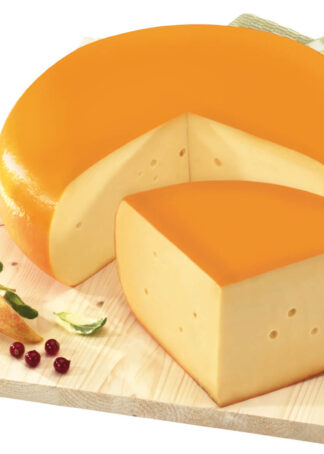
- Aged Gouda, 24 months and up. Butterscotch, salt crystals, toffee. The best coffee cheese there is.
- Parmigiano Reggiano, 24 to 36 months. Savoury, crystalline, brothy.
- Comté, especially older wheels with their brown butter and hazelnut notes.
- Mature Cheddar, whose sharpness needs a medium roast rather than a dark one.
- Manchego, whose nuttiness sits perfectly against caramel-heavy roasts.
- Gorgonzola Dolce and other mild creamy blues, with milk in the coffee.
- Mascarpone and cream cheese, which is tiramisu taken apart.
Do not work:
- Very ripe, ammoniated washed rinds with black espresso.
- Delicate fresh cheeses with a dark roast. The coffee wins in one sip.
- Extremely salty, dry cheeses with a bitter, under-extracted coffee. Everything turns metallic.
Five pairings worth trying tonight
- Aged Gouda (24 months or older) with a medium roast filter. If you try only one, try this. Butterscotch on butterscotch, and the salt crystals make the coffee taste sweeter.
- Parmigiano Reggiano with an espresso. A chunk of 30 month Parmigiano, then a short black. The end-of-meal Italian sequence, formalised.
- Fresh goat's cheese with a light roast Ethiopian pour-over. Add honey and sourdough toast and it becomes a proper breakfast.
- Gorgonzola Dolce with a flat white. The milk carries the blue, the roast handles the salt. The one that converts sceptics.
- Leipäjuusto or halloumi, warmed and dunked in black filter coffee. Grill it until it blisters, drop it in the cup, eat it with a spoon. Strange for ten seconds and then completely obvious.
How to run a coffee and cheese tasting
You need less than you think. Three cheeses and two coffees is plenty for four people.
- Brew one light roast and one medium or dark roast, both as filter, and keep them in warmed jugs.
- Serve 20 to 30g of each cheese per person, at room temperature.
- Use small cups, 60 to 100ml, so nobody is full after the first round.
- Go light to dark, mild to strong. Once you have had a dark roast next to a blue, a fresh goat's cheese tastes of nothing.
- Water and plain crackers between rounds. No chutney, which adds sugar and muddies what you are testing.
- Taste in this order: cheese, coffee, cheese again. The second bite tells you whether the pairing did anything.
Quick answers
Does cheese really go with coffee? Yes, especially aged hard cheeses. Both develop nutty, caramelised flavours, and Nordic, Italian and Colombian food cultures have been doing it for generations.
What cheese goes best with coffee? Aged Gouda. Sweet, salty and crystalline, and it works with almost any roast level.
Espresso or filter? Filter, if you are trying more than one cheese. Espresso works but it is intense and inflexible, and it only suits the strongest cheeses.
Does coffee go with blue cheese? With milk in it, yes, and very well. A flat white handles the salt. Black dark roast with a strong blue is harsher than most people enjoy. Decaf works exactly the same way, since it is roasted the same way.
What about cheese in the cup, literally? That is kaffeost, and it needs a firm, low-melt cheese like leipäjuusto or halloumi. Do not try it with Cheddar unless you enjoy an oil slick.
Find a combination that works and it stops being a party trick. Log the cheese and what you drank with it in the app, browse the cheese catalogue for aged Goudas worth hunting down, or keep score with the cheese tracker. For more pairings that read as wrong on paper, we have a list of those too.
Get the app.
Track every cheese you try, scan any label, and find what is good near you. Free on iOS and Android.
Download Cheezus