Mozzarella vs Burrata: The Real Difference Explained
Mozzarella and burrata start from the same curd but do very different jobs. A clear comparison of texture, taste, price and when to use each one.
The difference in one sentence: mozzarella is a solid ball of stretched curd, and burrata is a thin pouch of that same mozzarella filled with cream and shredded curd. Same starting milk, same stretching technique, completely different eating experience.
That is the honest answer to the question, and everything below is the detail that helps you decide which one to put in your basket on a Friday afternoon.
What mozzarella is
Mozzarella is a fresh pasta filata cheese. Milk is set with rennet, the curd is left to acidify, then it is worked in very hot water (roughly 85 to 90C) until glossy and stretchy, and pulled into balls. The name comes from mozzare, to cut off, which is exactly what the maker does with thumb and finger.
Two types matter in the UK:
- Fior di latte, made from cow's milk. The standard supermarket ball. Mild, milky, springy.
- Mozzarella di Bufala Campana DOP, made from water buffalo milk in Campania and neighbouring areas. Softer, whiter, tangier, pricier and protected by law.
There is also the low moisture block sold for pizza and toasties. It browns beautifully and it is a different thing from fresh mozzarella. Do not put it in a salad.
What burrata is
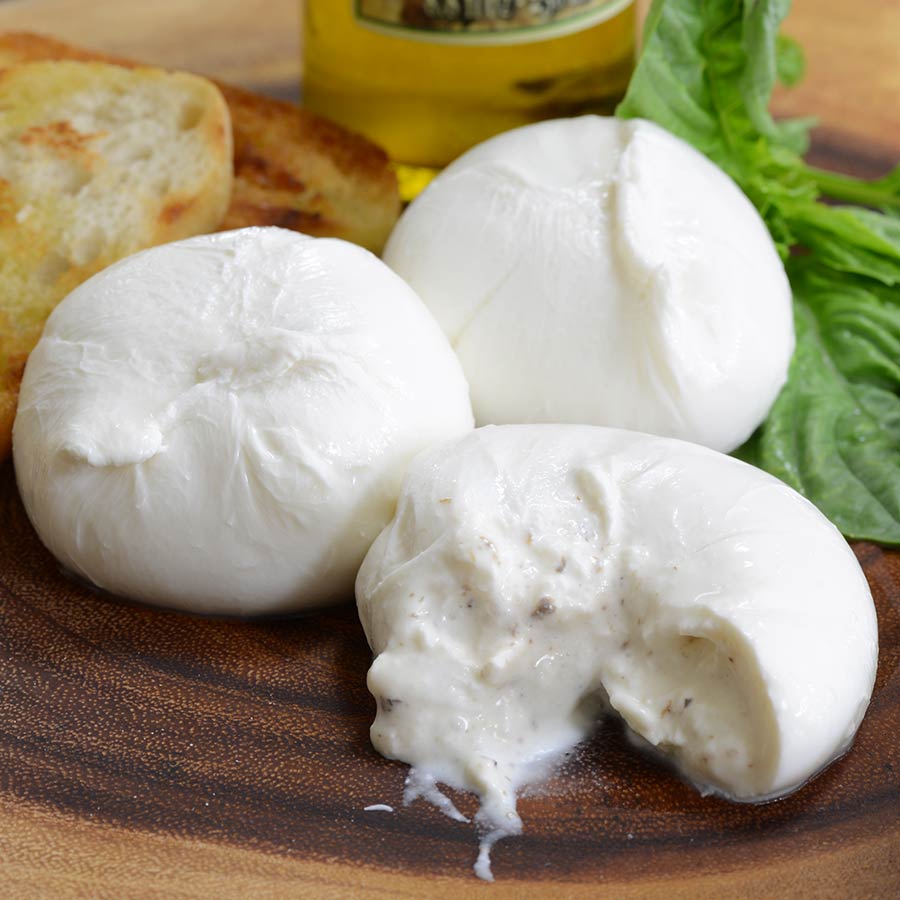
Burrata uses mozzarella as building material. A disc of hot stretched curd is shaped into a sack, filled with stracciatella (torn shreds of the same curd mixed with fresh cream), then knotted shut. It comes from Puglia and started life as a way of using up the leftover scraps of curd.
So burrata is not a different cheese family. It is mozzarella with a job change: from the whole product to the outer skin.
Mozzarella vs burrata at a glance
| Fresh cow's mozzarella (fior di latte) | Buffalo mozzarella | Burrata | |
|---|---|---|---|
| What it is | Solid ball of stretched curd | Solid ball of stretched buffalo curd | Mozzarella pouch filled with cream and curd shreds |
| Milk | Cow | Water buffalo | Cow (buffalo versions exist but are rare) |
| Texture | Springy, slightly squeaky, uniform | Softer, looser layers, wetter | Thin firm skin, molten creamy centre |
| Taste | Clean, mild, milky | Tangy, grassy, more mineral | Sweet, buttery, rich, very mild |
| Salt level | Low | Low to medium | Very low, needs seasoning |
| Melts well | Yes | Yes, but releases a lot of water | No, it collapses |
| Best eaten | Within a week | Within 2 to 3 days | Within 1 to 2 days |
| Typical UK price (125g) | Around £1 | Around £2.50 to £3.50 | Around £3 to £5 |
| Use it for | Pizza, bakes, everyday salads | Caprese, standalone plates | Centrepiece plates, tomatoes, stone fruit |
Texture: the real difference
Mozzarella is one texture all the way through. Bite it and it pushes back slightly. Good fresh mozzarella has a gentle squeak and releases a little milky liquid when cut. That resistance is the appeal, and it is why it works cubed and tossed through other things.
Burrata is two textures at once. The skin has that same mozzarella spring, and behind it is something closer to loose clotted cream with soft threads running through it. The contrast is the point. Serve it in cubes and you have destroyed the cheese and wasted your money.
Taste: burrata is milder than you expect
People assume burrata tastes stronger because it costs more. It does not. Cream is rich but it is not flavourful in the way that acidity or age is. Burrata is sweeter and fattier than mozzarella, but arguably has less flavour than a good buffalo mozzarella, which brings real tang and a grassy, mineral edge.
That is why burrata needs help on the plate: flaky salt, black pepper, a peppery olive oil and something acidic next to it. Without those it reads as expensive nothing.
Buffalo or cow?
Buffalo milk has more fat and protein than cow's milk, and it makes a mozzarella that is softer, whiter and noticeably more interesting. Eating it on its own or in a caprese, buffalo is worth the extra.
On a pizza or in a bake, cow's milk mozzarella is the better buy. Buffalo mozzarella carries a lot of water and will flood a base. Cheaper, drier and more useful is the right call.
Burrata is almost always cow's milk, because the pouch has to hold together and cow's curd is more forgiving to shape. Buffalo milk burrata exists and is a treat, but you will need a specialist supplier.
Is burrata just posh mozzarella?
Not really, though the accusation is understandable. Burrata is a cream delivery system that happens to be wrapped in mozzarella. You are paying for the filling, the hand work in tying each one, and a supply chain that has to move very fast.
Whether that is worth three or four times the price depends on what you are doing with it. As the centre of a plate with good tomatoes and good bread, yes. Chopped into a pasta salad for a picnic, absolutely not. Buy mozzarella.
Cooking with each
Pizza. Fresh cow's mozzarella, torn and drained on kitchen paper for 15 minutes first, or low moisture block if you want proper browning. Burrata goes on after the pizza comes out of the oven, torn open over the top, never before.
Lasagne and bakes. Mozzarella, every time. It melts into strings and browns. Burrata's cream will split under long heat and give you a greasy layer.
Caprese. Buffalo mozzarella traditionally, burrata if you want a richer version. Tomatoes at room temperature and salted 10 minutes ahead in both cases.
Pasta. Both work off the heat. Stir mozzarella cubes into hot pasta at the last second so they go stringy, or spoon burrata over the top and let it melt from the pasta's own warmth with lemon zest and black pepper.
Salads. Mozzarella for anything you toss and mix. Burrata for anything you plate and photograph. Our guide to unexpected cheese pairings covers a few combinations for both that sound wrong and are not.
Toasties. Neither is ideal. Fresh mozzarella is too wet and burrata is a disaster. See the ultimate grilled cheese sandwich for cheeses that earn their place between two slices of bread.
Serving both properly
- Take either out of the fridge 30 to 45 minutes before eating. Around 18 to 20C is the target. Cold kills fresh cheese completely.
- Keep them in their liquid until the last minute, then drain.
- Salt them. Both are made deliberately low in salt.
- Tear rather than slice. A torn edge holds dressing where a knife edge sheds it.
- Never freeze either one. The texture does not come back.
Which should you buy?
Buy mozzarella if it is going to be heated, mixed, layered, taken on a picnic or used in any quantity. It is cheap, reliable and does a job.
Buy burrata if it is the thing people will look at. One ball, one plate, ripe tomatoes or peaches, salt, oil, bread, done. Eat it the day you buy it.
Buy buffalo mozzarella if you want the most flavour per pound and you are eating it plain.
Quick answers
Is burrata healthier than mozzarella? No. Burrata contains added cream, so it is higher in fat and calories per 100g than plain mozzarella. Neither is a health food, and both are fine as part of a normal diet.
Can I substitute burrata for mozzarella in a recipe? Only in cold or off-the-heat dishes. In anything baked, use mozzarella.
Which is better for a caprese salad? Buffalo mozzarella is the classic. Burrata makes a richer version that is arguably better with slightly under ripe tomatoes because the cream compensates.
Why is my mozzarella squeaky and rubbery? Either it is too cold, or it is a low moisture block product rather than fresh mozzarella. Let it warm up and check the packaging.
Does burrata have a rind? No. The outside is mozzarella and you eat all of it.
Which lasts longer in the fridge? Mozzarella, comfortably. Burrata is at its best on day one and noticeably worse by day four.
Next time you buy either, log what you thought in Cheezus so you remember which brand was worth it, and browse the cheese catalogue if you fancy something with a bit more age on it.
Get the app.
Track every cheese you try, scan any label, and find what is good near you. Free on iOS and Android.
Download Cheezus