Parmesan vs Pecorino: Which to Use and When to Swap
Parmesan is cows' milk, pecorino is sheep's. Compare salt, cost and vegetarian status, with exact swap ratios for carbonara and cacio e pepe.
The headline difference is the milk. Parmesan is made from cows' milk and pecorino is made from sheep's milk, and everything else follows from that. Parmesan is nutty, savoury and relatively gentle. Pecorino is sharper, tangier, noticeably saltier and has a faint lanolin richness that only sheep's milk gives you. For carbonara and cacio e pepe, you want pecorino. For risotto, pesto and a wedge on a board, you want parmesan.
The word pecorino literally comes from pecora, the Italian for sheep. Once you know that, the whole family tree makes sense.
Parmigiano Reggiano, Grana Padano and "parmesan"
These three are not interchangeable, and the price gaps between them are earned.
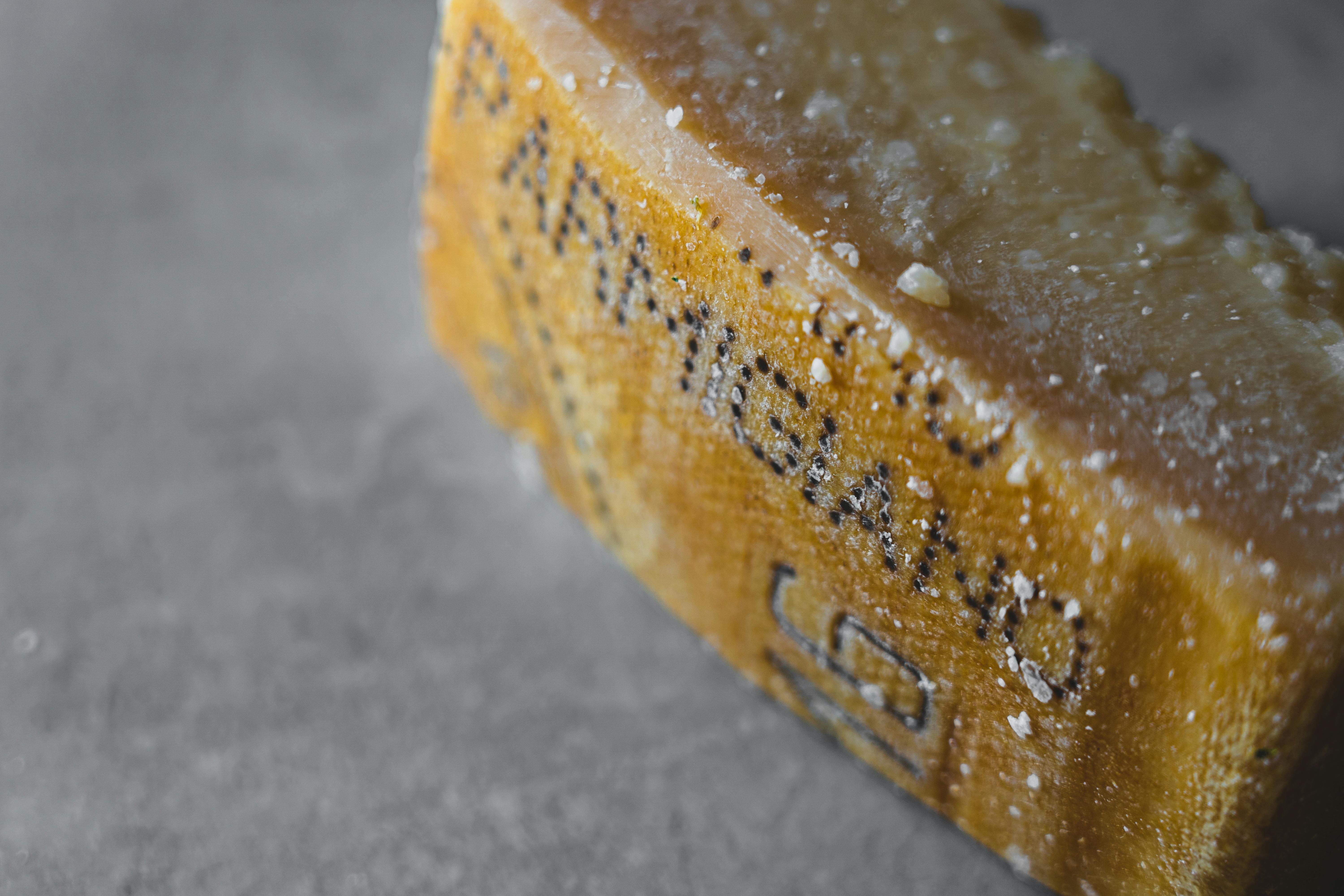
Parmigiano Reggiano DOP is the real thing. It can only be made in Parma, Reggio Emilia, Modena, the part of Bologna west of the river Reno, and the part of Mantua south of the Po. It uses raw, partially skimmed cows' milk, calf rennet and nothing else except salt. Wheels weigh around 40kg and the legal minimum ageing is 12 months, though most sold in the UK is 24 months and the good stuff runs to 36. Every wheel is hammer-tested by an inspector before it earns the pin-dotted rind.
Grana Padano DOP is its bigger, cheaper cousin, made across a much wider slice of the Po valley. Minimum ageing is nine months, the milk can come from cows fed silage, and lysozyme derived from egg white is permitted as a preservative. It is a good cheese and costs meaningfully less, but it is milder and less complex. If it is going into a sauce with plenty of other flavours, Grana Padano is the sensible buy.
"Parmesan" on its own is a legal minefield. In the EU, Parmesan is protected as the translation of Parmigiano Reggiano, so anything sold under that name there must be the DOP cheese. In the United States, parmesan is a generic term, which is why American shaker tubs can contain almost anything. In the UK, Parmigiano Reggiano holds protected status under the retained GI scheme. The practical rule: if the rind does not have Parmigiano Reggiano stencilled into it in dots, you are buying a hard Italian-style cheese, not the DOP.
The pecorino family
There are four main protected pecorinos and they taste quite different from each other.
- Pecorino Romano DOP is the salty, hard grating one. It is made in Lazio, Sardinia and the province of Grosseto in Tuscany, dry-salted by hand over several weeks, and aged at least five months for the table or eight months for grating. This is the one Roman pasta recipes mean.
- Pecorino Sardo DOP comes in a mild young version and a mature one. The mature is firm, nutty and less brutal than Romano.
- Pecorino Toscano DOP is the friendly one. Softer, sweeter, often sold young and eaten in slices rather than grated.
- Pecorino Siciliano DOP is firm and rustic, sometimes studded with black peppercorns.
If a recipe just says "pecorino" and it is a Roman pasta dish, it means Pecorino Romano. Grating young Toscano into carbonara is not wrong exactly, but it will taste flat.
Salt, and why it matters so much
Pecorino Romano is roughly twice as salty as Parmigiano Reggiano. Parmigiano sits somewhere around 1.5g of salt per 100g. Pecorino Romano is commonly in the 3 to 4g per 100g range, because dry-salting is a core part of how it is made and preserved.
This should change how you cook. Swap pecorino into a dish written for parmesan, keep everything else the same, and it will be too salty. Swap parmesan into a pecorino dish and it tastes underseasoned and slightly hollow.
How to substitute, with actual ratios
- Replacing parmesan with pecorino: use about two thirds to three quarters of the weight, and cut any added salt in the dish by roughly half. So 100g parmesan becomes 70g pecorino.
- Replacing pecorino with parmesan: use about 1.25 times the weight, and add a decent pinch of salt at the end, tasting as you go. So 100g pecorino becomes 125g parmesan plus seasoning.
- The safest swap of all is a 50/50 blend. Half parmesan for the nutty backbone, half pecorino for the sharp top note. Many Roman cooks do exactly this at home.
- Grana Padano for Parmigiano Reggiano: straight 1:1, but expect a milder result.
One more practical note. Pecorino has less moisture and a different fat structure, so it is more likely to clump and go stringy if it hits a pan that is too hot. That is the number one cause of scrambled carbonara. Take the pan off the heat, let it cool for thirty seconds, then add the cheese and egg mixture.
Which for carbonara, cacio e pepe and everything else
Cacio e pepe: Pecorino Romano, full stop. Cacio is Roman dialect for cheese and in this dish it specifically means pecorino. There is no parmesan in an authentic cacio e pepe. Use plenty of starchy pasta water, finely grated cheese, and coarsely cracked black pepper toasted in a dry pan first.
Carbonara: Pecorino Romano traditionally, with guanciale and egg yolk. Plenty of excellent Roman restaurants use a mix with a little Parmigiano to soften the salt, and it is a completely defensible cheat if pure pecorino is too much for you.
Amatriciana and gricia: Pecorino Romano again. The Roman pasta canon is a pecorino canon.
Risotto: Parmigiano Reggiano. You want the nutty sweetness and the smoother melt for the mantecatura, the final beating in of butter and cheese.
Pesto alla genovese: Parmigiano Reggiano plus a smaller amount of aged sheep's cheese, traditionally Fiore Sardo. Basil is delicate and straight pecorino bulldozes it.
Baked pasta and mac and cheese: Parmigiano for the body, with a little pecorino on top for a sharper crust. Our three-cheese mac and cheese uses that logic.
On a board: both. Parmigiano Reggiano should be broken into rough chunks with a stubby almond-shaped knife, never sliced, and served with aged balsamic or honey. Pecorino Toscano slices cleanly and loves pear and broad beans.
Cost
Rough UK prices, which move with the market:
| Cheese | Typical UK price | Minimum ageing |
|---|---|---|
| Parmigiano Reggiano DOP, 24 month | £26 to £36 per kg | 12 months |
| Grana Padano DOP | £15 to £22 per kg | 9 months |
| Pecorino Romano DOP | £20 to £30 per kg | 5 months (8 for grating) |
| Pecorino Toscano DOP | £24 to £34 per kg | 20 days to 4 months |
Buy a wedge and grate it yourself. Pre-grated cheese is drier, cut with anti-caking agents, and never melts as cleanly.
Are they vegetarian?
Neither Parmigiano Reggiano nor Pecorino Romano is vegetarian. Parmigiano Reggiano must use calf rennet under its DOP rules. Pecorino Romano uses lamb rennet paste. Grana Padano also uses animal rennet.
For the same job without animal rennet, look at British hard cheeses made as vegetarian alternatives. Twineham Grange from Sussex and Old Winchester from Lyburn Farm in Hampshire both grate well and bring a comparable savoury, crystalline bite.
Quick answers
Is pecorino stronger than parmesan? Yes. Sharper, tangier and about twice as salty.
Can I use parmesan instead of pecorino in carbonara? You can, and it will be pleasant, but it will be noticeably milder and less Roman. Add extra salt and consider a 50/50 blend.
What are the crunchy white bits in aged parmesan? Tyrosine crystals, an amino acid that forms as the cheese ages. They are a sign of proper maturation, not a fault, and they are one of the best bits.
Should I keep the rind? Absolutely. Drop a parmesan rind into minestrone, ragù or a bean soup and simmer it for the whole cooking time. Fish it out before serving. Pecorino rinds work too but push the salt up, so season the dish last.
How should I store it? Wrap the cut face in greaseproof paper, then loosely in foil, and keep it in the least cold part of the fridge. Cling film directly on the paste makes it sweat.
Next time you grate one over a bowl of pasta, log it in the cheese tracker, then dig through the cheese catalogue for the next sheep's milk cheese worth meeting.
Get the app.
Track every cheese you try, scan any label, and find what is good near you. Free on iOS and Android.
Download Cheezus