The Best Cheeses for a Summer Picnic (And What Melts)
Which cheeses survive a hot day out, which collapse, how to pack them, a ready-made selection for four, and how long cheese is safe out of the fridge.
The best cheeses for a summer picnic are hard, aged and low in moisture: Comte, mature clothbound Cheddar, Manchego, aged Gouda, Pecorino and Gruyere. They were built to survive without refrigeration, they get better as they warm up, and they will not turn your cool bag into a crime scene. Soft ripened cheeses like Brie and Camembert are the ones that let you down.
The rule underneath all of this is water. Hard aged cheeses are roughly 30 to 35 per cent water, well salted and fairly acidic, which is precisely why they keep. Soft and fresh cheeses can be over 50 per cent water with much less salt, which is lovely on a cheeseboard in November and a liability on a hillside in July.
The cheeses that survive a warm day out
Comte. If you take one cheese, take this. Aged 12 months or more, firm, nutty, faintly caramelised, and effectively indestructible. It softens slightly in the heat and tastes better for it.
Clothbound Cheddar. Not the shrink-wrapped block. A proper Somerset clothbound Cheddar from a maker like Montgomery's or Westcombe holds its shape, and the sharpness stands up to being eaten outdoors with wind and background noise, which flattens flavour more than people realise.
Manchego. Spanish, sheep's milk, PDO, from La Mancha. A 12 month Manchego is firm, buttery and slightly sweet, and it is one of the few cheeses that genuinely improves at picnic temperature.
Aged Gouda. An 18 month or older Gouda goes crunchy with tyrosine crystals and tastes of butterscotch and stock. Very low moisture, so it barely notices the heat. Children eat it happily too.
Halloumi, grilled at home. Griddle it the night before, chill it, and eat it cold with lemon and mint. It is firm, salty and it does not weep.
Feta, kept in its brine. Leave it in the tub and drain it when you get there. The brine keeps it cold and stops the edges drying out.
Stilton, if you want a blue. It is firm and crumbly enough to travel, unlike a soft blue. Keep it wrapped and next to an ice pack. Gorgonzola Dolce, by contrast, will arrive as a puddle. If blues are your thing, we went into the history of blue cheese properly.
The cheeses that collapse
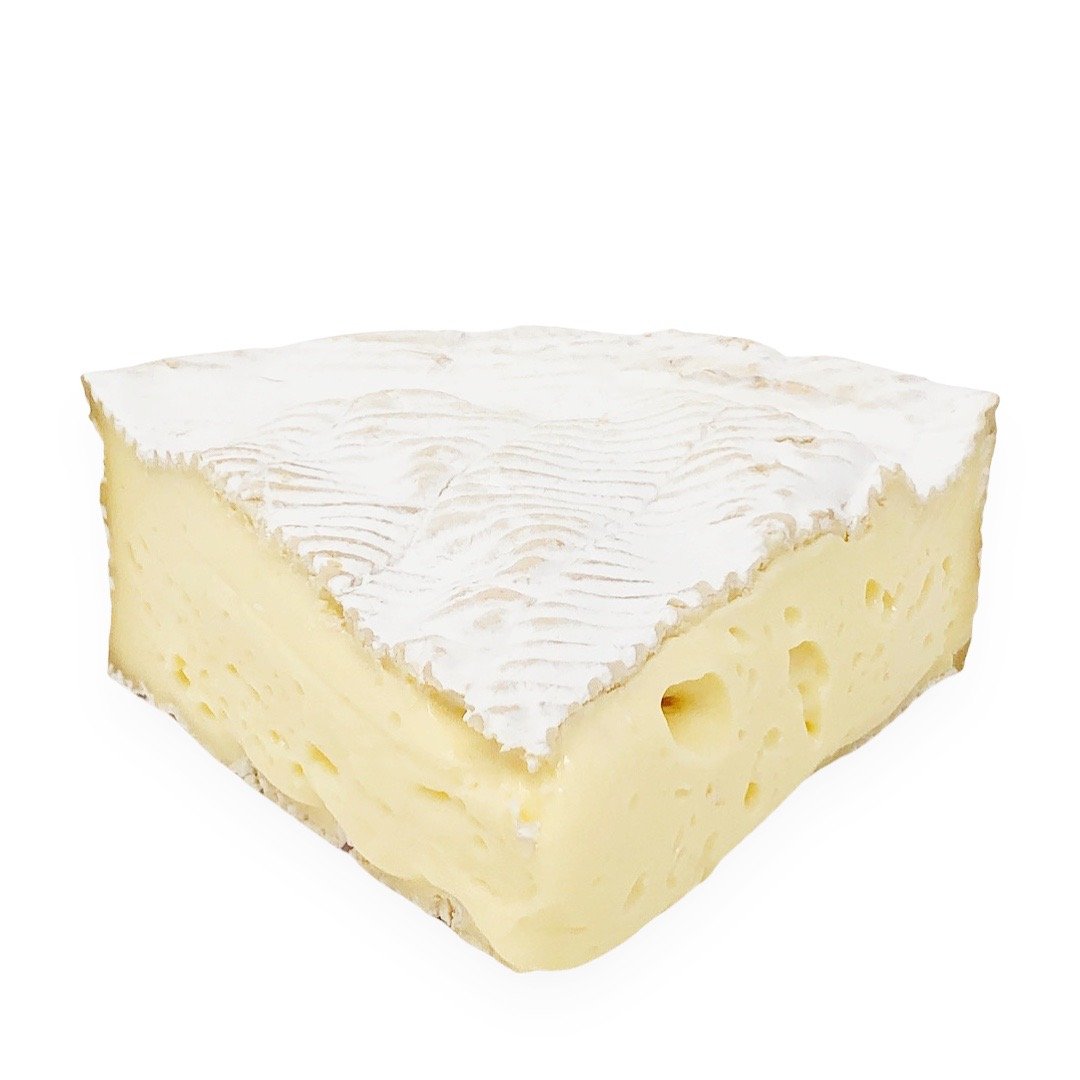
- Brie and Camembert. Above about 25C the paste breaks down into something closer to soup, and once that has happened, chilling it will not bring the texture back.
- Burrata and fresh mozzarella. They need to be cold and eaten within minutes. Warm mozzarella is flat and squeaky.
- Ricotta and cottage cheese. High moisture, low salt, and the two things bacteria like most. Leave them at home.
- Fresh goat's logs. They sweat, then they smear across everything else in the box.
- Washed rind cheeses. Epoisses, Munster, Vacherin. A hot car will make one of these the only thing anyone remembers about the day, and not fondly.
A ready-made picnic selection for four
Allow 100 to 125g of cheese per person if it is the centre of the meal, so around 450g in total. This lot covers every base without repeating itself:
- 150g Comte, 12 to 18 months, cut into a wedge and left whole
- 100g clothbound Cheddar
- 100g Manchego, 12 month
- 100g feta in brine, or a block of griddled halloumi
- A small wedge of Stilton if you want a blue
Serve with: a proper sourdough or a baguette, oatcakes for the blue, cornichons, radishes with salt, cherries, apricots, ripe tomatoes with olive oil, salted almonds and a wedge of membrillo for the Manchego. Honey is worth carrying in a tiny jar.
To drink: a dry Provencal rose, an English sparkling, or a chilled Beaujolais, which is one of the very few reds that is better cold. Cider with the Cheddar. If you want something more interesting, unexpected cheese pairings has more ideas if you are bored of grapes.
How to transport it properly
- Wrap in waxed or greaseproof paper, not clingfilm. Cheese needs to breathe. Clingfilm traps moisture against the surface and by lunchtime it tastes of plastic.
- Then put it in a rigid box. Cheese in a soft bag arrives as a single sad slab.
- Two ice packs, cheese in the middle. One underneath, one on top. Cold falls, so the top one does most of the work.
- Freeze a bottle of water the night before. It doubles as an extra cold pack and as a cold drink by mid-afternoon.
- Do not pre-slice everything. Cut surfaces dry out and warm up far faster than a whole wedge. Take a small knife.
- Keep the bag in the shade, and never in the boot of a parked car. A car interior in direct sun climbs well past 50C.
- Take it out 20 to 30 minutes before eating. Cold mutes flavour badly. Hard cheese tastes best at around 16 to 18C, which on a warm day means taking it out shortly before you want it, not on arrival.
The food safety reality
Here is the honest version, and it is not medical advice: if you have any specific health concern, particularly if you are pregnant, immunocompromised or feeding very young children, check with a health professional rather than a cheese app.
The general guidance is that perishable food should not sit out of the fridge for more than two hours, and no more than one hour if it is above 32C. The UK Food Standards Agency advises keeping chilled food at 8C or below and treating four hours out of the fridge as an absolute limit, after which it should be thrown away rather than put back.
That said, not all cheese carries the same risk. Hard aged cheeses are genuinely low risk because there is not enough free water in them for bacteria to do much. The real caution applies to soft, fresh, high moisture cheeses, which is another reason they are a poor picnic choice. Listeria is the specific concern, and it is why soft ripened and unpasteurised soft cheeses come with warnings for pregnant people.
Practically: keep everything cold on the way there, eat within a couple of hours of unpacking, and do not carry leftovers home in a warm bag to eat tomorrow. Hard cheese that has sweated a little fat is fine within that window. The oil on the surface is just butterfat coming out of the paste, not a sign that anything is wrong.
Quick answers
How long can cheese stay out of the fridge at a picnic? Two hours is the standard guidance, one hour above 32C. Hard aged cheeses are far more forgiving than soft ones, but the clock still applies to what you take home.
What is the single best picnic cheese? Comte. Firm enough to travel, interesting enough to eat on its own, and liked by almost everyone.
Can I take Brie if I keep it really cold? You can, but manage your expectations. Eat it in the first half hour, and put it directly against an ice pack.
What about a hike rather than a picnic? Vacuum packed aged Gouda or Pecorino. Both survive hours in a rucksack without a cool bag.
There is mould on my cheese. Is it ruined? On hard cheese, cut 2.5cm around and below the spot and the rest is fine. On soft or crumbly cheese, throw the whole thing away, because mould threads run right through it.
Browse the full cheese catalogue to plan your selection, then use the cheese tracker to log what actually got eaten first. That is usually the one worth buying again.
Get the app.
Track every cheese you try, scan any label, and find what is good near you. Free on iOS and Android.
Download Cheezus