Stilton vs Roquefort vs Gorgonzola: The Blues Ranked
The big three blue cheeses compared on milk, strength, texture and price, with an intensity scale and a beginner to expert tasting progression.
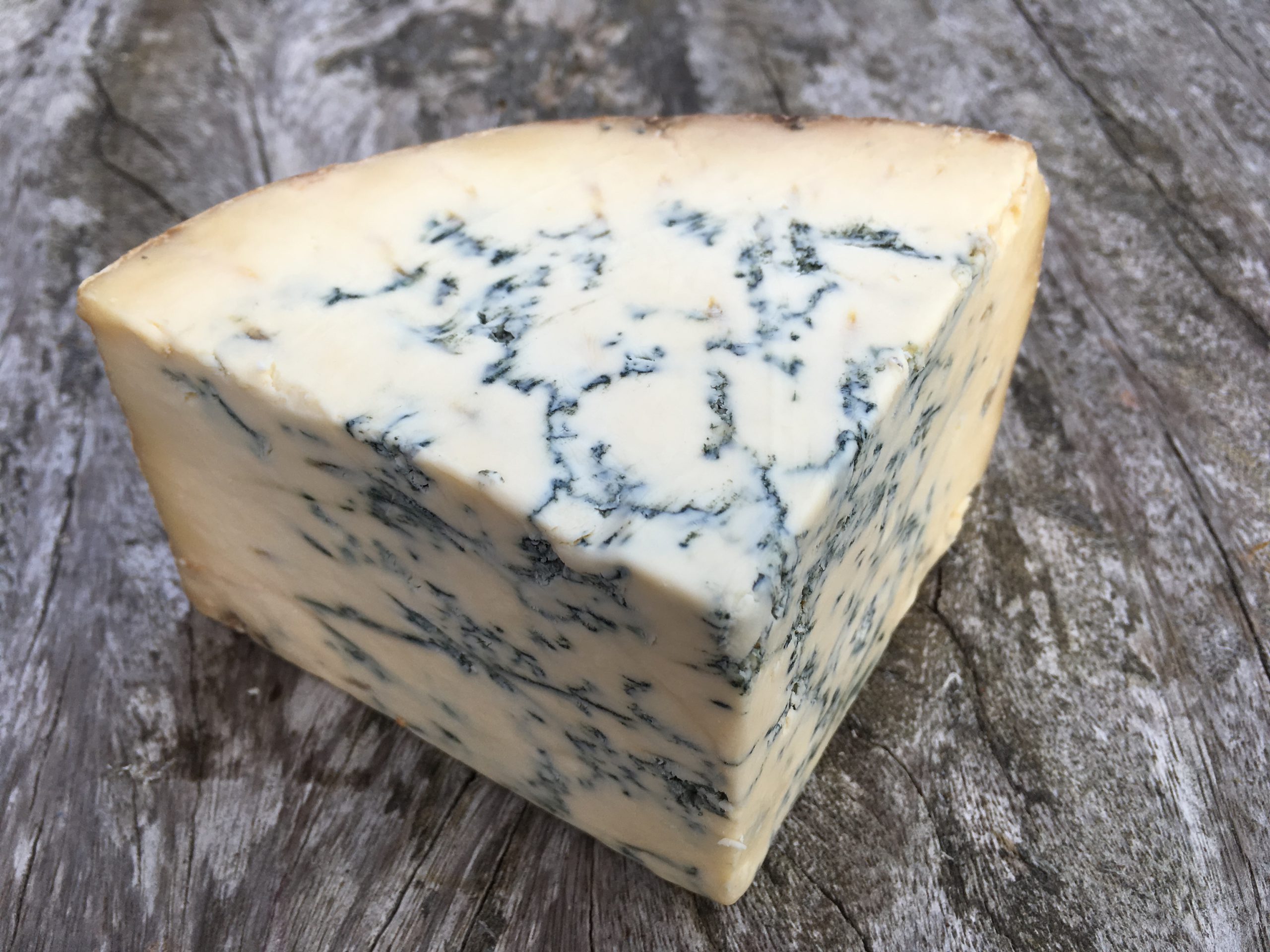
Stilton is English, made from pasteurised cow's milk, crumbly and mellow with a mineral tang. Roquefort is French, made from raw sheep's milk and ripened in limestone caves, and it is the saltiest and sharpest of the three. Gorgonzola is Italian and made from cow's milk, and it comes in two very different versions: dolce, which is soft enough to spoon and genuinely gentle, and piccante, which is firmer and far more assertive.
If you only remember one line: Gorgonzola Dolce is the mildest, Stilton is the middle ground, Roquefort is the strongest. Work up in that order and you will never have a bad blue cheese experience again.
How a blue cheese gets blue
All three are made with a mould called Penicillium roqueforti, added to the milk or the curd at the start. Some Gorgonzola also uses Penicillium glaucum. The mould does nothing at first, because it needs oxygen and the inside of a cheese has none.
So at around four to six weeks the cheesemaker pierces the wheel with stainless steel needles. Air travels down those channels, the mould wakes up and fruits along them, and that is why the veining follows visible lines rather than random speckles. For the full story of how anyone worked this out, see the history of blue cheese.
The intensity scale
Rough, but useful in a shop:
- 1 to 2, gentle: Fourme d'Ambert, Cashel Blue
- 3 to 4, easy: Gorgonzola Dolce, Saint Agur
- 5 to 6, proper blue: Stilton, Shropshire Blue, Bleu d'Auvergne
- 7 to 8, assertive: Gorgonzola Piccante, Stichelton, Danish Blue at the salty end
- 9 to 10, ferocious: Roquefort, Valdeon, Cabrales
Most people who say they hate blue cheese first met one from the bottom of that list. Start at three, not nine.
Stilton
Protected since 1996, Stilton can only be made in Derbyshire, Leicestershire and Nottinghamshire, from pasteurised cow's milk. It cannot legally be made in the village of Stilton itself, which sits in Cambridgeshire and was simply where the cheese was sold to coach travellers.
The wheels are tall cylinders with a dry, crusty, brownish natural rind, matured for around nine weeks minimum and often longer. Colston Bassett, which still hand-ladles its curd, and Cropwell Bishop are the names most cheesemongers steer you towards.
Taste: buttery and mellow at first, then a slow mineral tang that builds and lingers. Moist and crumbly rather than wet.
Best for: the centre of a cheeseboard, port, celery soup, pears and walnuts, and steak sauce. It melts into a rich, slightly grainy sauce.
Worth knowing: Stichelton is made in Nottinghamshire to a traditional Stilton method but with raw milk, which is exactly why it cannot legally be called Stilton. More complex, more variable, and worth seeking out once you already love Stilton.
Roquefort
One of France's oldest protected cheeses, made from the raw milk of Lacaune sheep and ripened in the natural caves of Combalou at Roquefort-sur-Soulzon in Aveyron. Those caves are cut through with fleurines, natural fissures that pull cool, damp air through the rock and hold conditions steady year-round. Minimum maturing is three months.
Look for Papillon, Carles, Gabriel Coulet, Vernieres or Societe on the foil. Roquefort has no rind, which is why it always arrives wrapped.
Taste: salty, around 4%, with a sharp tingle on the tongue, a distinct sheepy richness and a wet, almost fudgy texture that smears rather than crumbles.
Best for: dressings, melting over a steak in the last seconds, walnut bread, and the classic pairing with Sauternes, where the sweetness takes the salt straight off. Best blue for a vinaigrette, because a little goes a very long way.
Do not: build a big creamy pasta sauce out of it. It dominates and can turn bitter with heat.
Gorgonzola
Made in Lombardy and Piedmont from cow's milk, and the only one of the three that comes in two officially distinct styles.
Gorgonzola Dolce is matured for a minimum of 50 days. Pale, wet, soft enough to spoon out of the wheel, sweet and creamy with only a light blue prickle. The friendliest blue cheese in wide circulation.
Gorgonzola Piccante, sometimes labelled naturale or montagna, gets at least 80 days. Firmer, drier, crumblier and considerably sharper, with a proper peppery bite.
Best for: Dolce melts better than any other blue, because it is young and wet and emulsifies into cream without splitting. Around 100g stirred into 100ml of warm double cream off the heat is enough sauce for two generous plates of gnocchi. Piccante belongs on a board or in a risotto.
Two more worth knowing
Bleu d'Auvergne is a protected cow's milk blue matured for a minimum of 28 days. It delivers a lot of Roquefort's punch with a rounder, less sheepy character, usually at a lower price, which makes it the best value blue for dressings and dips.
Cashel Blue has been made by the Grubb family in Tipperary since 1984, from cow's milk. Buttery, gently mushroomy and soft, it is the blue to hand someone convinced they hate blue cheese.
At the other extreme, Cabrales from Asturias can be made from a mix of cow, goat and sheep milk and is aged in mountain caves. Enormous, wet, salty and genuinely confrontational. A destination, not a starting point.
What to use each one for
| The job | Best pick | Why |
|---|---|---|
| Cheeseboard centrepiece | Stilton or Gorgonzola Piccante | Structure and a long finish |
| Pasta or gnocchi sauce | Gorgonzola Dolce | Emulsifies without splitting |
| Salad dressing | Roquefort or Bleu d'Auvergne | Intensity that survives dilution |
| Steak sauce | Stilton | Mellow enough not to bully the beef |
| Broccoli or celery soup | Stilton | Salt and body, no bitterness |
| Pears, honey and walnuts | Gorgonzola Dolce | Sweet on sweet works here |
Melting rules that stop blue cheese sauces failing
- Add it off the heat. Boiling a blue splits the fat out and pushes the flavour bitter.
- Use cream, not milk. The extra fat stabilises the sauce.
- Be mean. 40 to 60g per person is plenty in a pasta sauce. Blue does not scale like cheddar.
- Crumble it cold. At room temperature it smears on the knife. Fridge-cold it breaks cleanly.
A beginner to expert progression
- Cashel Blue or Fourme d'Ambert. Soft, buttery, almost no bite.
- Gorgonzola Dolce. Sweet and spoonable, the first that tastes properly blue.
- Stilton. Firmer, drier, with real mineral length.
- Gorgonzola Piccante. The cheese you already like, turned up.
- Roquefort. Salt, sheep and electricity. Eat it with something sweet first time.
- Cabrales. Only once you have enjoyed all five above.
Buying and storing
Roquefort is almost always the most expensive of the three in the UK, often 30% to 50% more per kilo than a good Stilton or Gorgonzola, because it is a raw sheep's milk cheese with a long protected maturation. Stilton and Gorgonzola sit in much the same bracket, and Bleu d'Auvergne undercuts all of them.
Wrap blues in waxed paper, then loosely in foil. Never clingfilm, which traps moisture against the cut face and turns it slimy. Take them out of the fridge 45 to 60 minutes before eating, because a cold blue tastes of nothing but salt. Surface fuzz is normal and scrapes off. A strong ammonia smell means it has gone too far.
Quick answers
Is the mould safe to eat? Yes. Penicillium roqueforti is a cultured food-grade strain deliberately added by the cheesemaker, and it is not the same thing as the mould on forgotten bread.
Are they vegetarian? Many Stiltons use vegetarian rennet, so check the pack. Roquefort and protected Gorgonzola do not.
Can I eat blue cheese when pregnant? NHS advice is to avoid soft blue cheeses unless cooked until steaming hot. This is general information and not medical advice, so speak to your midwife or GP.
What should I drink with them? Port with Stilton, Sauternes with Roquefort, a big Barolo with Gorgonzola Piccante. For stranger ideas, see unexpected cheese pairings.
Blue cheese rewards keeping notes, because the difference between a Stilton you loved and one you found harsh is usually the dairy and the age rather than the style. Browse the full range in the Cheezus catalogue and log the ones that land in the cheese tracker, so next time you are at the counter you know exactly what to ask for.
Get the app.
Track every cheese you try, scan any label, and find what is good near you. Free on iOS and Android.
Download Cheezus