Gruyere vs Comte: Taste, Melting, Price and Which to Use
Gruyere is saltier, Comte is fruitier. Compare origin, ageing, flavour, melting and price, plus which to pick for fondue, croque monsieur or a board.
Gruyère is Swiss, Comté is French, and they are close cousins rather than twins. Gruyère is saltier, more savoury and slightly more assertive. Comté is fruitier, sweeter and more varied from wheel to wheel. Both are large-format alpine cows' milk cheeses made from raw milk in copper vats, pressed and cooked, and both melt beautifully. If you are making fondue, reach for Gruyère. If you are building a cheeseboard or making a croque monsieur, Comté usually has the edge.
Where they come from
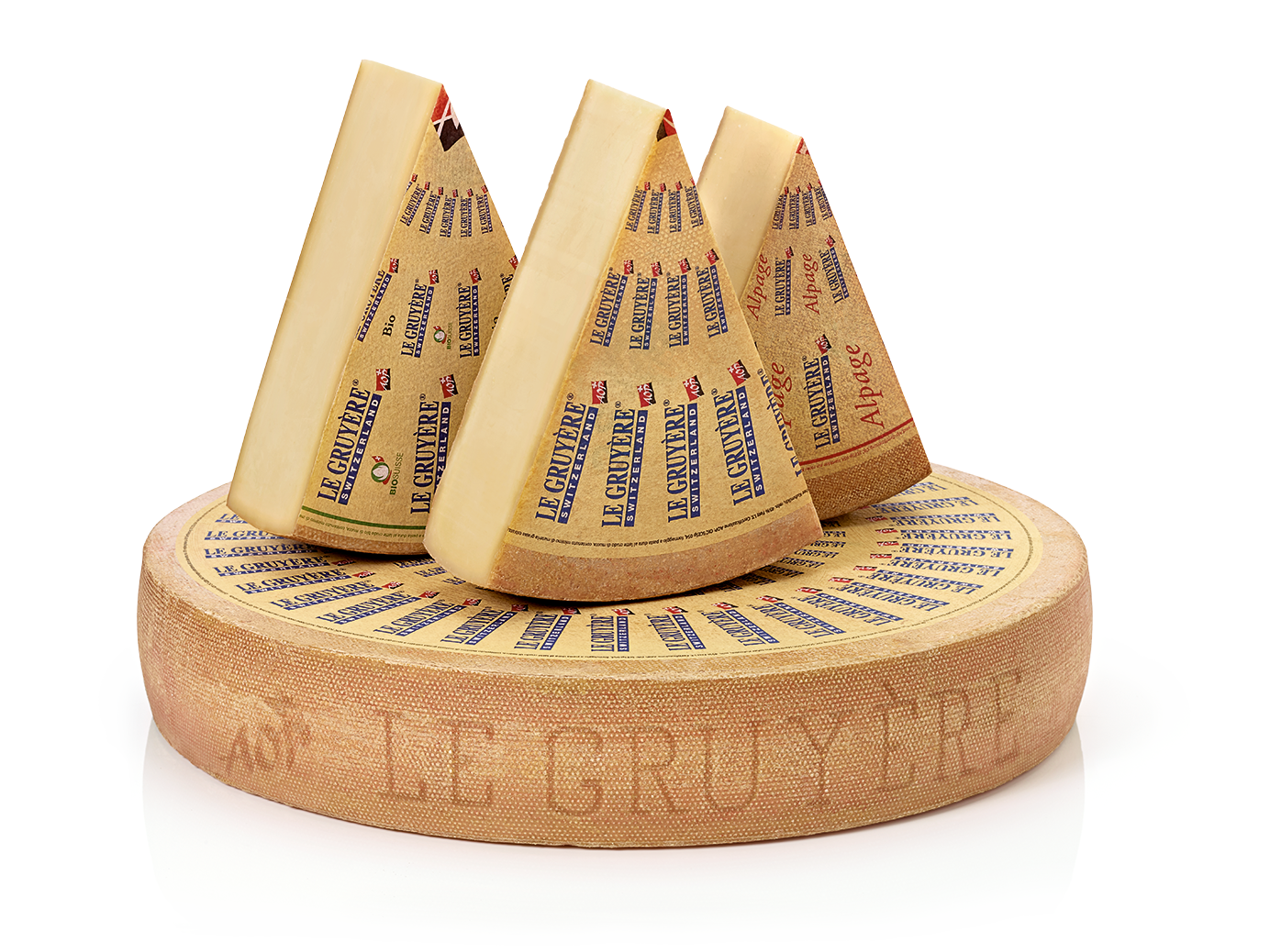
Le Gruyère AOP is made in western Switzerland, principally in the cantons of Fribourg, Vaud, Neuchâtel and Jura plus parts of Bern. Wheels are big, around 35kg and 55 to 65cm across. The milk is raw, the cows are fed no silage, and the minimum ageing is five months. Most of what you buy sits at five to nine months, with réserve wheels held for ten months or more, and Alpage versions made only in summer with milk from cows grazing high mountain pasture.
One thing worth clearing up: Le Gruyère AOP is essentially hole-free. The holey Swiss cheese in cartoons is Emmental. If you want to know why one has holes and the other does not, we went down that rabbit hole in why cheese has holes.
Confusingly, France also makes a Gruyère IGP, from Savoie and Franche-Comté, and that one is required to have small holes, somewhere between a pea and a cherry in size. It is milder and cheaper than the Swiss AOP. Check the label for "Le Gruyère AOP" if you want the original.
Comté AOP comes from the Massif du Jura in eastern France, covering the Doubs, the Jura and slices of Ain and Haute-Saône. It was one of France's first protected cheeses, recognised in 1958. The rules are unusually strict:
- Only Montbéliarde and French Simmental cows
- A minimum of one hectare of pasture per cow
- No silage, ever
- Milk collected within a short radius and taken to a village co-operative dairy called a fruitière, of which there are around 140
- Minimum four months ageing, with most sold between 8 and 24 months
Then every wheel is graded on a 20 point scale. Score 14 or above and it gets a green band and is sold as Comté Extra. Score 12 to 14 and it wears a brown band. Below 12 and it cannot be sold as Comté at all. That grading system is a big part of why Comté is so reliable.
How they taste
Gruyère leads with savoury. Beef broth, browned butter, roasted hazelnut, a firm salty edge and, in older wheels, a slightly barnyard funk with crunchy tyrosine crystals. It has real grip. Young Gruyère is supple and mild, and a 12 month reserve is a completely different animal, dense and almost meaty.
Comté leads with fruit and sweetness. Brown butter, toasted hazelnut, apricot, warm milk, sometimes something close to caramel or brioche. It is less salty than Gruyère, which lets more of the fruit come through. It also varies by season and by fruitière: summer milk from flowering pasture gives a fruitier, more floral cheese, winter hay milk a nuttier, denser one. The Comté producers publish an aroma wheel with more than 80 descriptors, which tells you how seriously they take that variation.
Melting behaviour
Both are excellent melters, because the curd is cut small and cooked, which drives out moisture and leaves a structure that goes silky rather than greasy.
- Gruyère melts stringier and more elastic and keeps its flavour under heat, so it is the better choice when the cheese has to punch through strong ingredients.
- Comté melts smoother and sweeter, and browns to a lovely nutty crust under a grill.
Neither will split if you treat it properly. Grate rather than cube, add it off the heat or on a low heat, and use a little cornflour or a proper roux to keep a sauce stable.
Which one for what
Fondue: Gruyère. The Swiss classic is moitié-moitié, literally half and half, meaning equal parts Le Gruyère AOP and Vacherin Fribourgeois. If you cannot get Vacherin Fribourgeois, half Gruyère and half Emmental works. Rub the caquelon with garlic, use a dry white like Fendant or a Chasselas, and add a splash of kirsch and a teaspoon of cornflour to stop it splitting.
Croque monsieur: Comté. French cafés typically use Comté or Emmental, and Comté's sweetness against the ham and béchamel is the better balance. Gruyère works but pushes the whole thing saltier.
Quiche Lorraine and gratins: either. Gruyère is the textbook answer for quiche. Comté is the better answer for a potato gratin, where you want sweetness against the cream.
French onion soup: Gruyère. You need something that survives being blasted under a grill on top of a very savoury broth.
Toasties: Comté for a straight ham and cheese, Gruyère if you want more attitude. Both are a serious upgrade on the default, and there is more on getting the technique right in our ultimate grilled cheese guide.
Cheeseboard: Comté. An 18 month Comté is one of the great board cheeses, sweet enough for people who think they dislike strong cheese and complex enough for people who do not. Cut it into slabs rather than thin slices. Put a Gruyère next to it so people can taste the difference.
Alpine bakes: Comté. For anything in the tartiflette family, an alpine wheel does much the same job Reblochon does.
Price
Approximate UK prices, which do shift:
| Typical UK price | Minimum ageing | Wheel size | |
|---|---|---|---|
| Le Gruyère AOP, 6 to 9 month | £28 to £36 per kg | 5 months | around 35kg |
| Le Gruyère AOP Réserve, 12 month+ | £34 to £45 per kg | 10 months | around 35kg |
| Comté AOP, 12 month | £22 to £30 per kg | 4 months | 32 to 45kg |
| Comté AOP, 18 to 24 month | £30 to £42 per kg | 4 months | 32 to 45kg |
| French Gruyère IGP | £14 to £20 per kg | 4 months | around 42kg |
Comté is generally the better value of the two, largely because France produces far more of it and it is more widely distributed in the UK.
Substitutes for each
For Gruyère: Comté is closest, then Beaufort, then Emmental if you want it milder or Appenzeller if you want it stronger. Aged Gouda works in a gratin but brings a butterscotch note. Jarlsberg is the weakest option, sweet and rubbery by comparison.
For Comté: Gruyère first, then Beaufort, then Abondance. Beaufort is a superb swap, richer and more floral, though usually pricier.
For a vegetarian option: neither AOP is vegetarian, since both require animal rennet. Try a British alpine-style cheese made with microbial rennet, such as Old Winchester from Hampshire.
Quick answers
Which is stronger, Gruyère or Comté? Gruyère, mainly because it is saltier. A 24 month Comté can be more intense in flavour complexity, but Gruyère hits harder up front.
Can I use Comté instead of Gruyère? Yes, in almost any recipe, at a straight 1:1 swap. The result will be slightly sweeter and less salty, so taste before you add extra salt.
Are they lactose free? Effectively, yes. Long-aged hard cheeses like these contain negligible lactose because it converts to lactic acid during ageing. If you have a diagnosed intolerance, check with a health professional rather than taking a cheese article's word for it.
Why is Comté so much cheaper than Gruyère? Volume and geography. Comté is France's highest-production AOP cheese and it has a short trip into the UK. Le Gruyère AOP is made in smaller quantities in a high-cost country.
What should I drink with them? Comté with a Jura Chardonnay or, if you can find one, Vin Jaune, which is a legendary pairing. Gruyère with a dry Riesling, a Chasselas or a decent dry cider.
Whichever one ends up on your board, log it while you are eating it. The cheese tracker makes it easy to compare a 12 month against an 18 month six weeks later, and the cheese catalogue has plenty more alpine wheels to work through.
Get the app.
Track every cheese you try, scan any label, and find what is good near you. Free on iOS and Android.
Download Cheezus