Cow vs Goat vs Sheep Cheese: How Milk Shapes Flavour
Cow, goat, sheep and buffalo milk make very different cheese. Here is why, with fat and protein figures, seasonality and named examples of each type.
Cow's milk cheese is the mellow, buttery, savoury one. Goat's milk cheese is bright, tangy and lemony. Sheep's milk cheese is the richest and sweetest of the three. Buffalo milk cheese is the whitest and creamiest. Almost everything else about a cheese, the rind, the age, the salt, the bacteria, is a decision the maker took. The animal is the one thing they cannot fake.
Swap the species and you change the fat, the protein, the colour and the way the curd behaves in the vat. Here is what actually differs, and which cheeses show it off best.
The numbers behind the flavour
Whole milk is mostly water. What matters is the roughly 12 to 20% that is not, and that fraction varies enormously by species.
| Milk | Fat | Protein | Colour of the cheese |
|---|---|---|---|
| Cow | around 3.5 to 4% | around 3.2 to 3.4% | pale yellow to deep gold |
| Goat | around 3.5 to 4.5% | around 3 to 3.5% | bright chalky white |
| Sheep | around 6 to 7% | around 5.5 to 6% | ivory to pale cream |
| Buffalo | around 7 to 9% | around 4.5% | the whitest of all |
Those figures shift with breed, season and diet, but the ranking holds. A litre of sheep's milk yields roughly twice as much cheese as a litre of cow's milk, but a ewe gives a small fraction of what a dairy cow gives in a day. The maths never works out in your favour at the till.
Why goat's cheese is white and cheddar is yellow
This is one of the most reliable tells on a cheese counter. Cows absorb beta-carotene from grass and pass it into their milk, where it sits in the fat and turns it yellow. Goats, sheep and buffalo convert beta-carotene into colourless vitamin A before it reaches the udder, so their milk and their cheese come out white.
Two useful consequences. First, if a cheese is bright, chalky white, it is almost certainly not cow's milk (or it has been made from milk with the cream removed). Second, cow's milk cheeses get more yellow in summer when the grass is lush, and paler in winter on hay and silage. That seasonal colour shift is visible in a good Comté or a farmhouse cheddar if you buy the same wheel across a year.
The orange in cheddar, Red Leicester and Mimolette is a different story entirely. That is annatto, a plant dye from achiote seeds, added deliberately. It adds essentially no flavour.
Why goat's cheese tastes tangy
The tang is chemistry, not imagination. Goat's milk is relatively high in three medium-chain fatty acids: caproic, caprylic and capric acid. They are literally named after the goat, from the Latin capra. As cheese ages and the fats break down, those acids are released and you get the sharp, faintly barnyard, slightly soapy note that people either love or reject outright.
Two practical implications:
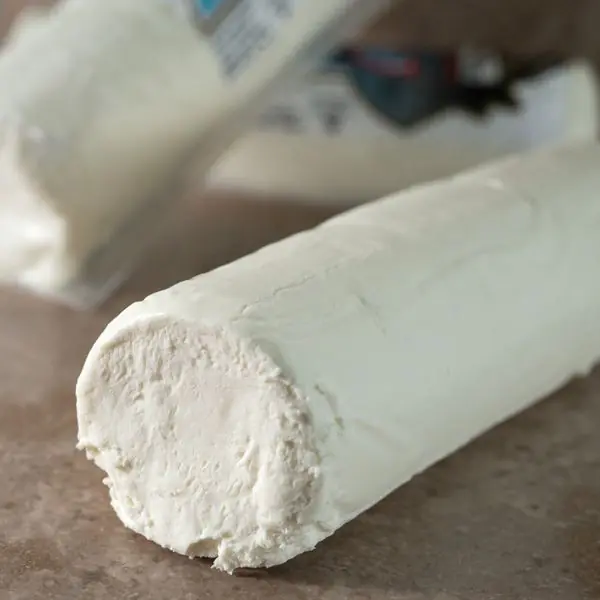
- Young goat's cheese is much gentler than aged. A fresh chèvre log is lemony and clean. The same cheese at three months is far more assertive. If goat has put you off before, start young.
- The tang is not a fault. Neither is disliking it. Roughly the same split exists with coriander leaf.
Goat's milk also behaves differently in the vat. Its fat globules are smaller and it is generally lower in alpha-s1 casein than cow's milk, which produces a softer, more fragile curd. That is why so many classic goat's cheeses are small, soft, ash-coated and eaten young. Making a huge hard wheel from goat's milk is possible but genuinely harder.
Why sheep's milk cheeses taste so rich
Because they are. At around 6 to 7% fat and nearly 6% protein, sheep's milk is close to double-strength compared with cow's. The flavour reads as sweet, lanolin-rich, nutty and a bit oily in the best sense, with a texture that coats your mouth rather than crumbling away.
Sheep's milk is also the best partner for blue moulds. It is high in fat for the mould to work on and naturally sweet enough to stand up to salt, which is why Roquefort, made from Lacaune sheep's milk and aged in the Combalou caves at Roquefort-sur-Soulzon, tastes balanced rather than merely brutal. There is more on how that tradition started in our history of blue cheese.
Buffalo milk, the outlier
Water buffalo milk is the fattiest of the four and the whitest. It is also scarce, which is why real Mozzarella di Bufala Campana DOP costs several times what a supermarket cow's milk mozzarella does, and tastes several times better: milky, slightly sour, tender, faintly grassy. Eat it within a day or two of buying it and never straight from the fridge.
Buffalo milk is not only for fresh cheese. Italian makers in Lombardy produce buffalo blues and semi-hard wheels worth seeking out.
Seasonality, and why it matters more than you think
Cows can be managed to milk more or less year round. Sheep and goats are seasonal breeders, lambing and kidding in late winter, milking through spring and summer, then drying off. Modern producers stagger their flocks to extend the season, but the rhythm still shows.
What that means for you:
- Fresh goat's cheese is at its best from late spring through summer, when the milk is abundant and the animals are on new grass.
- Aged sheep's milk cheeses made from spring milk come into their own months later. A Manchego or Ossau-Iraty made in April is worth eating the following winter.
- Alpine cow's milk cheeses made from summer mountain pasture milk are the prized ones. Look for the words alpage or estivo on French and Italian labels.
Digestibility, honestly
This is where a lot of nonsense gets repeated, so here is the careful version.
All four milks contain lactose, at broadly similar levels: cow around 4.7%, goat around 4.4%, sheep around 4.8%. Goat's cheese is not lactose-free. What genuinely reduces lactose is ageing, not species. Most of the lactose drains away with the whey, and bacteria consume most of what remains during maturation. That is why well-aged hard cheeses of any milk, such as Parmigiano Reggiano at 12 months or more, or a two-year cheddar, contain only trace amounts, while fresh cheeses of any milk contain more.
Separately, cow's milk allergy is a reaction to milk proteins, not to lactose, and sheep and goat proteins are similar enough to be a problem too. Some people do report finding goat and sheep dairy easier to digest, usually explained by the smaller fat globules and lower alpha-s1 casein. The evidence is mixed and this is not medical advice. If you have a genuine allergy or persistent symptoms, talk to a doctor or dietitian.
Named examples worth buying
Cow. Comté, Gruyère, farmhouse cheddar, Parmigiano Reggiano, aged Gouda, Stilton, Camembert de Normandie, Taleggio and Emmental.
Goat. Sainte-Maure de Touraine, Valençay, Crottin de Chavignol, Selles-sur-Cher, Garrotxa from Catalonia, and the wine-washed Murcia al Vino from Spain.
Sheep. Manchego, Pecorino Romano (very salty, built for grating), Pecorino Toscano (much gentler), Ossau-Iraty from the French Basque country, Idiazabal from the Spanish side, Roquefort, and the English sheep's milk cheese Berkswell.
Buffalo. Mozzarella di Bufala Campana DOP, plus the buffalo blues and semi-hards coming out of northern Italy.
Quick answers
Which milk makes the strongest cheese? None inherently. Ageing, salt and mould do that. But goat's milk gives the sharpest tang for a given age.
Is sheep's cheese healthier? It is higher in fat, protein, calcium and zinc per 100g. Higher in calories too. Choose it because it tastes better, not because of a health claim.
Why is goat's cheese so much cheaper than sheep's? Goats give more milk per animal than ewes, and goat's cheese is usually sold young rather than aged for a year.
What is a good mixed board? One cow, one goat, one sheep, one blue. It teaches you more in one sitting than a board of four cheddars ever will, and it pairs beautifully. If you want a starting point, try our guide to unexpected cheese pairings.
Next time you taste something and cannot place it, check the milk first. It narrows the field faster than anything else. Browse the cheese catalogue to compare species side by side, and log what you try in the cheese tracker so you can spot which milk you actually gravitate towards.
Get the app.
Track every cheese you try, scan any label, and find what is good near you. Free on iOS and Android.
Download Cheezus