How to Store Cheese: Stop Ruining It With Cling Film
Cling film suffocates cheese. Here is how to store every type properly, how long each one lasts, what freezes, and how to revive a dried out piece.
Take cheese out of the cling film it came in, wrap it in waxed or greaseproof paper, put it in a loosely closed box or bag, and keep it in the salad drawer at the bottom of the fridge. That one change does more for your cheese than anything else here, and it takes ninety seconds.
Why cling film is the wrong answer
Cheese is alive. The bacteria and moulds that made it are still working, still producing gas and moisture. Seal that in airtight plastic and three things go wrong.
- It suffocates. Trapped ammonia and carbon dioxide sit against the surface. That is the sharp, nail varnish smell on an old bit of Brie.
- It sweats. Moisture condenses on the plastic and runs back onto the cheese, giving you the slimy grey film on a week old lump of Cheddar.
- It tastes of plastic. Fat is a solvent, cheese is mostly fat, and given long enough it picks up flavour from the film.
Vacuum packing is different. A commercial pack is fine while sealed, because there is no oxygen and no headspace. Once open, treat it like any other cheese.
What to use instead
Best: proper cheese paper. Two layers, waxed paper against the cheese and a breathable film outside. It lets the cheese exhale while holding enough humidity that it does not dry out. A roll costs a few pounds and lasts months.
Nearly as good, and already in your kitchen: greaseproof or waxed paper wrapped snugly around the cheese, then dropped into a box or a loosely closed food bag. The paper handles the breathing, the box handles the humidity.
Also fine: foil, for blue cheese specifically. It stops the blue mould migrating onto everything else in the drawer.
Rewrap with fresh paper each time, and wrap each cheese separately or they will colonise each other.
Where in the fridge, and at what temperature
Most cheese wants 8C to 12C. Your fridge runs at 4C to 5C, colder than ideal but far better than the alternative.
Use the salad drawer at the bottom, the warmest and most humid part of the fridge. Cheese absorbs odours like a sponge, so keep it clear of cut onion and anything smoked. The door is the worst spot, because the temperature swings every time you open it.
Storing by type, and how long each lasts
Hard cheeses (Cheddar, Comté, Gruyère, Manchego, Parmesan)
Waxed paper, then a box. The toughest cheeses you own, low in moisture and high in salt.
- Cut piece: 3 to 4 weeks, and Parmesan or a very aged Comté goes longer
- Surface mould: normal. Cut at least 2cm around and below the spot and the rest is fine.
- The enemy is drying, not spoiling
Soft bloomy rind (Brie, Camembert, Tunworth, Baron Bigod)
Keep it in its wooden box if it came in one, in its original paper, inside a loose bag.
- Whole and unopened: to the date on the label, improving as it approaches it
- Once cut: 5 to 7 days, and it keeps ripening in the fridge
- A chalky white core means young, not faulty. These ripen from the outside in.
Washed rind (Époisses, Taleggio, Stinking Bishop, Munster)
The loud ones. Original box, waxed paper, then double bag them or the whole fridge will smell. Once cut, 1 to 2 weeks. A sticky, tacky orange rind is exactly right.
Blue (Stilton, Roquefort, Gorgonzola)
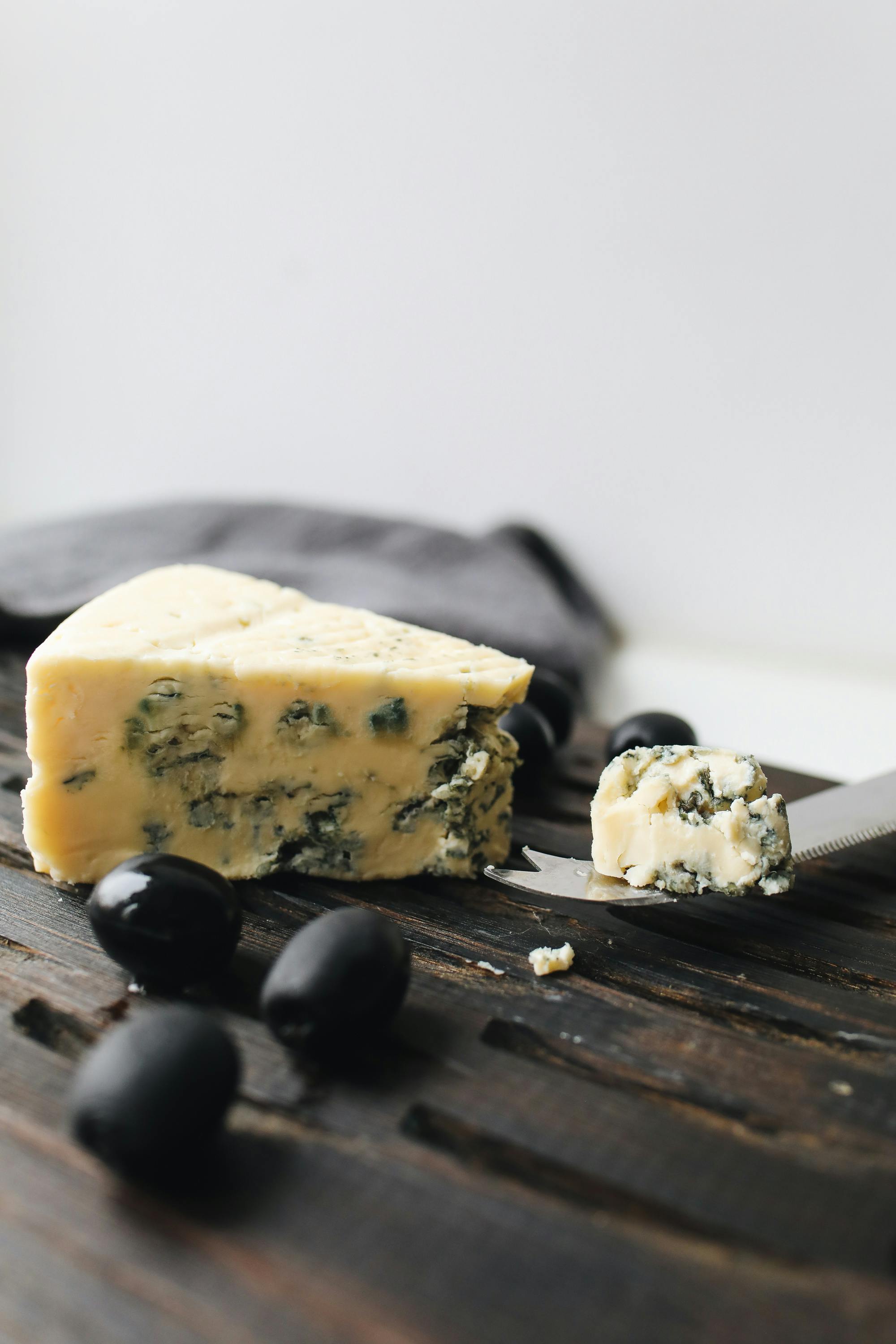
Foil or waxed paper, wrapped snugly, in its own container. Once cut, 2 to 3 weeks. Veins spreading further through the paste is normal, because the mould that makes it blue is the entire point of the cheese.
Fresh cheeses (mozzarella, burrata, ricotta, feta, fresh goat)
High moisture, low salt, short life.
- Mozzarella and burrata: in their liquid, coldest part of the fridge, 2 to 3 days once opened. Burrata is really a same day cheese.
- Feta: in brine, a month or more. Out of brine it sours within a week. If you tipped the brine, make more with a teaspoon of salt in a cup of water.
- Ricotta and cottage cheese: sealed tub, coldest shelf, 3 to 5 days.
- Fresh goat logs: paper and a box, about a week, tangier every day.
Freezing: what survives and what does not
Ice crystals tear through the protein network, so on thawing the water leaks out and the texture goes crumbly. Fatal for a cheese you want to eat as it is, irrelevant for one you are going to melt.
Freezes acceptably, for cooking only: hard cheeses grated first in portioned bags, up to 3 months; block mozzarella for pizza; halloumi, almost unchanged; Parmesan rinds, indefinitely, for stock.
Do not freeze: bloomy rinds, washed rinds, most blues, fresh mozzarella, burrata, ricotta, cottage cheese.
Grate before freezing rather than after, freeze flat in a bag with a spoonful of cornflour shaken through to stop clumping, and use it straight from frozen. Never refreeze.
Reviving cheese that has dried out
A hard cheese with a cracked, waxy cut face is not finished.
- The damp cloth trick. Wrap it in a cloth or kitchen paper dampened with water, or better, dry white wine or cider. Box it in the fridge overnight and it draws moisture back into the surface.
- If it is beyond that, grate it. Dry cheese grates beautifully and melts perfectly, which is exactly what a proper grilled cheese or a gratin wants.
- The petrified ends go into stock. A Parmesan or Comté rind simmered in soup adds a savoury depth you cannot get another way.
What to do with the rind
Bloomy white rinds (Brie, Camembert) are edible and part of the flavour, and washed rinds are where most of the punch lives. Natural rinds (Comté, Tomme, Stilton crust) are edible but often gritty, so try a bit. Hard rinds such as Parmesan are too tough raw but brilliant in stock. Cloth, wax and plastic rinds are not edible.
Gone off, or just strong
Normal, even when it is dramatic:
- A washed rind that smells like a farmyard
- Blue veins spreading through the paste
- White crystals crunching in aged Cheddar, Comté or Parmesan, which are calcium lactate or tyrosine and a sign of good ageing
- Fat weeping slightly when the cheese is warm
- Small holes or eyes, which come from gas the bacteria produce
Actually off, bin it:
- A sharp ammonia smell that stings the inside of your nose, not just a whiff
- Any fuzzy mould on a soft or fresh cheese. Discard the whole thing, because the mould network runs through high moisture cheese rather than sitting on the surface.
- Pink, black or bright orange fuzz on any cheese
- A slimy surface on a hard cheese that does not wipe off
- It tastes fizzy, yeasty or bitter when it should not
The reliable test is taste, not smell. A cheese that smells alarming but tastes clean is fine, which describes a lot of the best cheese in the world.
Storing cheese in hot weather
Above roughly 20C cheese sweats out its fat, and that fat does not go back in. In summer, buy less and buy more often, and get it home fast in the coolest bag you have.
For a picnic, wrap it in paper, box it so it does not get crushed, and keep an ice pack in the bag but not against the cheese. Set it out 20 minutes before eating rather than an hour, because a hot day does the warming for you. Anything that has slumped and gone greasy should be eaten that day or cooked with.
Quick answers
How long does cheese last once opened? Fresh 2 to 5 days, soft bloomy 5 to 7 days, washed rind 1 to 2 weeks, blue 2 to 3 weeks, hard cheeses 3 to 4 weeks.
Can I put cheese back in the fridge after a board? Yes, if it was out for under about four hours. Rewrap in fresh paper and use it for cooking.
Does cheese need to be airtight? No. Only fresh cheeses sitting in liquid want a sealed container. Everything else wants to breathe.
Do I really need cheese paper? No, greaseproof paper and a box gets you 90 percent of the way there.
Get storage right and you stop throwing money in the bin. Note what you liked in the Cheezus tracker so you buy it again on purpose rather than by accident.
Get the app.
Track every cheese you try, scan any label, and find what is good near you. Free on iOS and Android.
Download Cheezus