Mould on Cheese: When to Cut It Off and When to Bin It
How to tell good mould from bad, the 2.5cm rule for hard cheese, why soft cheese goes straight in the bin, and what every colour of mould is telling you.
It depends entirely on the cheese. On hard cheese, cut at least 2.5cm (1 inch) around and below the mouldy patch and eat the rest. On soft, fresh, sliced, grated or crumbled cheese, throw the whole thing away. And on blue and bloomy rind cheeses, the mould is the entire point.
That covers about 95 percent of what turns up in a fridge. Below is how to tell which situation you are in, what the different colours mean, and when the answer is simply bin it.
One note first: this is general food-safety guidance, not medical advice. If you are pregnant, immunocompromised, or worried about something you have already eaten, speak to a doctor or midwife rather than an article about cheese.
Mould that is supposed to be there
A lot of "help, my cheese has gone mouldy" panic is the cheese working exactly as designed. Cheesemakers have deliberately introduced moulds for centuries.
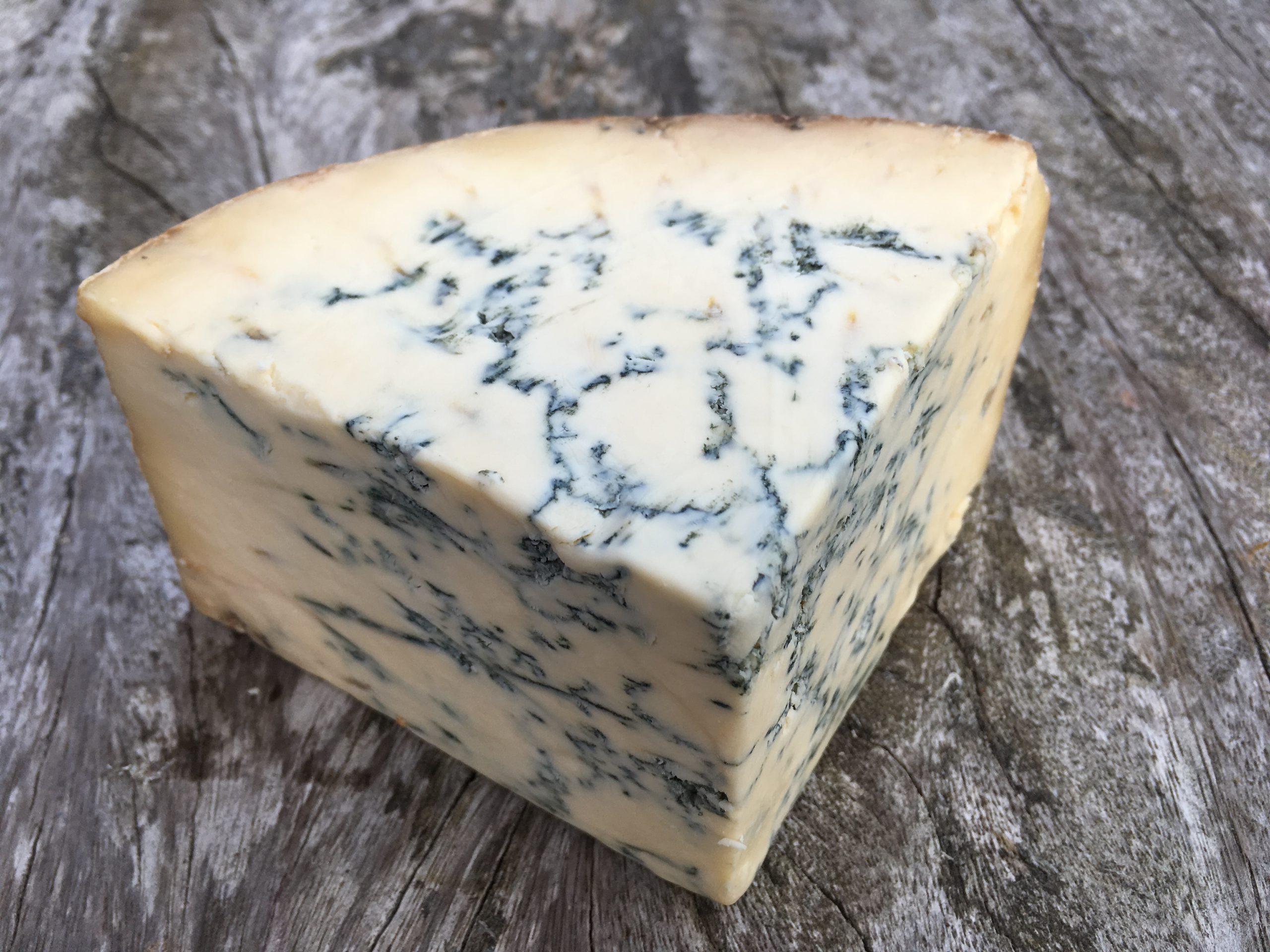
- Blue veining. Stilton, Roquefort, Gorgonzola and Fourme d'Ambert get their character from Penicillium roqueforti, added to the milk or curd and then encouraged by piercing the cheese with needles so air can reach it. We wrote about how that started in the history of blue cheese.
- White bloomy rinds. The soft, downy white coat on Brie, Camembert, Tunworth and Brillat-Savarin is Penicillium camemberti. It is edible, it is where a lot of the flavour lives, and eating around it is missing the point.
- Grey, brown and mottled natural rinds. Tomme de Savoie, many aged goat cheeses and cloth-bound cheddars grow a mixed rind of moulds and yeasts. The soft grey fuzz the French call "poil de chat", cat's fur, is a mucor mould and entirely normal there.
- Sticky orange rinds. Époisses, Taleggio and Munster are not mouldy. They are washed rind cheeses, and that tacky orange coat is Brevibacterium linens, a bacterium. It smells of feet. That is correct.
If the growth looks as it did in the shop and it is on a cheese meant to have a rind, leave it alone. Odd-looking is not the same as off, in the same way that the holes in Emmental are a feature rather than a fault.
The hard cheese rule: cut 2.5cm around it
This applies to cheddar, Comté, Gruyère, Parmigiano Reggiano, Manchego, Gouda, Emmental, Edam, Provolone, pecorino and anything else dense and dry.
Hard cheese has very little free moisture, and mould needs moisture to spread. The visible fuzz is the fruiting body, but the root system underneath cannot travel far through a tight, low-water paste. So the standard guidance from food safety bodies is to cut off at least 2.5cm (1 inch) around and below the mouldy spot, and eat the rest.
Do it properly:
- Use a clean knife and cut a generous margin, not a shave.
- Cut the mouldy piece away first, then wipe or change knives, so you are not dragging the blade through mould and into the good paste.
- Rewrap in fresh paper. Reusing the wrapper that touched the mould defeats the exercise.
The soft cheese rule: bin the lot
This applies to cream cheese, ricotta, cottage cheese, mascarpone, fresh mozzarella, feta in brine, fresh goat's cheese, and any soft cheese where mould has appeared in a colour it should not be.
High-moisture cheese is a very different environment. Mould filaments spread through it easily and invisibly, so what you see on the surface is not the extent of it. Worse, moulds rarely turn up alone: the conditions that let mould grow in a wet, low-acid cheese can also suit harmful bacteria you cannot see at all. Cutting around it does not help.
The same goes for grated, shredded, sliced and crumbled cheese, even when the cheese itself is hard. The surface area is enormous and everything in the bag has touched everything else. If one corner of a bag of grated cheddar is fuzzy, the bag is done.
What the colours are telling you
- White fuzzy spots on cheddar or another hard cheese. Very common, usually a harmless surface mould. Cut around it.
- White, flat, dry, chalky patches on a cut face. Often not mould at all, but calcium lactate crystals, a harmless by-product of ageing that is very common on cheddar. If it does not brush off and has no smell, it is almost certainly crystals.
- Blue or green fuzz. A Penicillium species, and the most common invader. On hard cheese, cut around it. On soft cheese, bin it.
- Black. Bin it, whatever the cheese. The exception is deliberate ash coatings on cheeses like Valençay and Sainte-Maure de Touraine. Ash is matte, even and dry. It is never fluffy.
- Pink, red or bright orange slime on a cheese that should be dry. Usually bacterial rather than mould, and a sign the cheese was kept too wet or too warm. Bin it. Not to be confused with the intentional sticky orange of a washed rind.
- Grey, wispy fuzz on a natural rind. Normal. Brush it off if you prefer the look.
Other signs, mould or not
- Ammonia. A faint whiff at the rind of a very ripe Camembert is normal and blows off in ten minutes at room temperature. If the whole cheese smells like window cleaner and the paste is slack and bitter, it is overripe. Not dangerous, just unpleasant.
- A slimy surface on a cheese that ought to be dry, or a yeasty, sour, nail-varnish smell on fresh cheese.
- Bloated vacuum packs that hiss when cut, or pink and brown liquid pooling in the packaging.
The bin-it list
Throw it out without agonising if:
- Any mould has appeared on a soft, fresh or high-moisture cheese
- Any mould has appeared in a bag of grated, sliced or crumbled cheese
- The mould is black, or pink and slimy
- It still smells wrong after you have cut the affected part away
- It has sat out in a warm room overnight
- You genuinely cannot tell, and you would be eating it with a knot in your stomach
That last one matters. A block of cheddar costs a few pounds. Peace of mind at 9pm is worth more.
How to stop it happening in the first place
Cheese that goes mouldy fast is almost always a wrapping or temperature problem rather than bad luck.
- Wrap in waxed or cheese paper, with loose foil over the top for harder cheeses. Clingfilm pressed onto a cut face traps moisture and suffocates the cheese, which is exactly what mould wants.
- Change the paper every few days. It is the single most effective habit.
- Store at 4 to 8C, which usually means the salad drawer rather than the coldest shelf, ideally in a lidded box.
- Use a clean knife every time, and buy less, more often. Cheese is not a stockpiling food.
Quick answers
Can I cut the mould off cheddar and eat the rest? Yes. Remove at least 2.5cm (1 inch) around and below the spot with a clean knife, then rewrap in fresh paper.
Is the white stuff on my Brie mould? Yes, and it is meant to be there. Penicillium camemberti is applied deliberately and is edible.
What happens if I accidentally eat mouldy cheese? Most of the time, nothing at all. Some people get mild stomach upset. If you develop persistent vomiting, breathing difficulty or a high fever, contact a doctor or your local health service.
Is mouldy cheese safe during pregnancy? The general position from UK and US health bodies is to avoid mould-ripened soft cheeses and uncooked soft blues while pregnant unless they are cooked until steaming hot throughout, because of the listeria risk. Anything that has grown unintended mould should be discarded rather than trimmed. Check with your midwife or GP.
Not medical advice
This is general food-safety guidance reflecting the standard advice from food safety authorities. It is not medical advice and cannot account for your circumstances. If you are pregnant, immunocompromised, have a mould allergy, or are unwell after eating something, speak to a qualified health professional.
Once you have rescued the good half of your cheddar, log it in the cheese tracker. You will quickly work out which cheeses keep well in bigger pieces and which ones to pick up fresh from the catalogue each week.
Get the app.
Track every cheese you try, scan any label, and find what is good near you. Free on iOS and Android.
Download Cheezus